
How Automated Trading is Transforming Financial Markets
Safety and Ethics in the Crypto Market
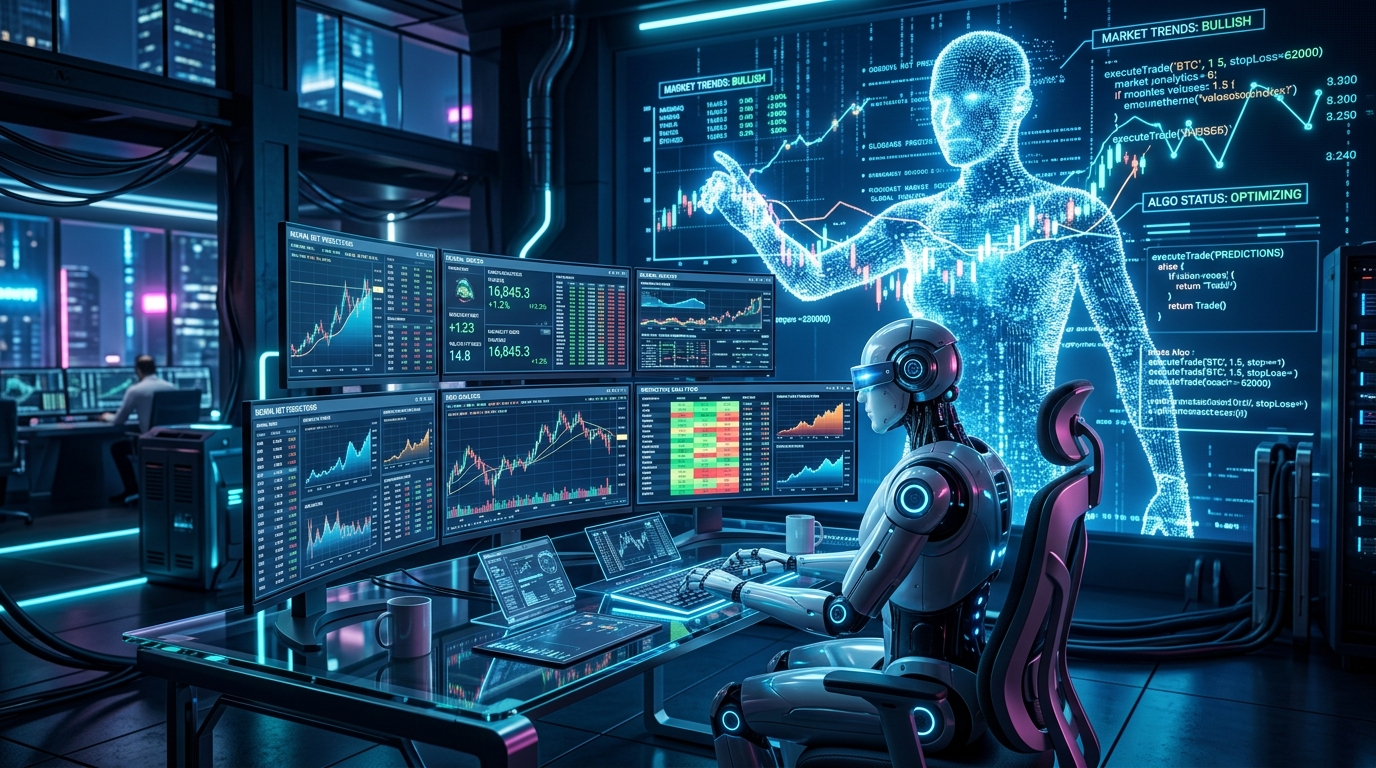
The rise of automation in financial markets is fundamentally altering trading practices. Originating from algorithmic foundations, the evolution into intricate machine-learning frameworks has made automated trading indispensable for both institutional and individual traders. This article delves into how automated trading is reshaping financial environments, highlighting key technologies, strategies, advantages, challenges, and the ethical implications of this transformation.
Understanding Automated Trading
Automated trading involves employing computer systems to carry out trades based on predefined algorithms without human involvement. These systems evaluate market data instantaneously, executing decisions at a velocity and precision beyond human capabilities. The origins of automated trading trace back to the late 1970s, beginning with basic rule-based systems that have now progressed into advanced platforms leveraging artificial intelligence (AI) and machine learning.
Technology's Influence on Automated Trading
The evolution of automated trading has been significantly influenced by advancements in technology. With the integration of machine learning and artificial intelligence, trading platforms are now capable of refining their strategies over time, detecting market trends and enhancing performance. High-frequency trading (HFT) has transformed the landscape by executing numerous trades each second, taking advantage of tiny price variations. Additionally, the advent of cloud technology, extensive data analysis, and robust networking has empowered traders to implement these sophisticated algorithms worldwide, offering continuous market access with minimal delays.
The Mechanics of Automated Trading Systems
Automated trading systems operate on algorithms—detailed sets of instructions crafted in various programming languages. These systems vary from basic rule-based strategies, such as initiating a purchase when a specific stock reaches a target price, to intricate AI-enhanced models that analyse past data to forecast future market behaviours.
Categories of automated trading systems include:
- Rule-Based Trading Systems: Carry out trades according to established, specific criteria.
- AI-Enhanced Solutions: Evolve and refine over time by processing extensive datasets, ensuring optimal trading decisions.
- Integrated Systems: Merge traditional rule-based methods with advanced machine learning for superior outcomes.
- blog_three_question_4.subtitle_4: blog_three_question_4.desc_4
Varieties of Automated Trading Approaches
Every approach is underpinned by intricate algorithms and necessitates meticulous tuning and risk oversight.
Automated trading employs various strategies tailored to market dynamics and individual objectives. Notable methods include:
- Arbitrage Techniques: These techniques capitalise on discrepancies in pricing between different markets or exchanges.
- Momentum Trading Approaches: These strategies aim to harness prevailing market trends, purchasing as prices ascend and divesting when they decline.
- Mean Reversion Tactics: Leverage the expectation that asset values will return to their average levels following notable fluctuations.
- Strategies for Market-Making: Gain from the price differential by executing buy and sell orders concurrently.
Advantages of Automated Trading Systems
Monvalute, or digital currencies, are transforming the way we think about money and investments. With platforms like Monvalute, trading cryptocurrencies has never been easier or more accessible. Imagine being able to buy, sell, and exchange assets at any time of the day, all from the comfort of your own home. The benefits of crypto trading are vast. For starters, the potential for high returns is enticing—many traders have seen their investments soar in value within a short period. Plus, the market operates 24/7, allowing you to capitalise on opportunities whenever they arise. Another advantage is the diversity of options available; with thousands of cryptocurrencies to choose from, you can tailor your portfolio to match your risk tolerance and investment goals. Additionally, the decentralised nature of crypto means that you have more control over your assets compared to traditional banking systems. With Monvalute, you’ll also find user-friendly tools and resources to help guide you through the trading process, making it suitable for both beginners and seasoned investors alike. So why not dive into the exciting world of cryptocurrency trading today?
Automated trading provides numerous benefits compared to traditional methods. Key advantages include:
- Speed and Precision: Advanced algorithms can perform trades at lightning speed, seizing market chances before they vanish.
- Minimisation of Human Mistakes: Automated trading platforms remove emotional influences and biases, fostering more reliable outcomes.
- Round-the-Clock Market Accessibility: These technologies function non-stop, guaranteeing that traders are always poised to engage with the market.
- Strategy Testing and Refinement: Prior to executing strategies, traders can utilise past market data for testing, enhancing efficacy while reducing potential losses.
Dangers and Hurdles of Automated Trading
Monvalute refers to the various cryptocurrencies that are available for trading, each with its own unique features and benefits. Engaging in crypto trading can be an exciting venture, especially with platforms like Monvalute that make it easy to navigate this digital landscape. One of the key advantages of trading monvalute is the potential for high returns. Unlike traditional investments, cryptocurrency markets can be highly volatile, offering traders the chance to capitalise on rapid price movements. This volatility can lead to significant profit opportunities if you know when to buy and sell. Additionally, the accessibility of crypto trading means that you can start with a relatively small investment. Many platforms, including Monvalute, allow you to trade fractions of coins, making it easier to dip your toes into the market without committing large sums of money upfront. Moreover, the global nature of cryptocurrency means you can trade 24/7, unlike traditional stock markets that have fixed hours. This flexibility allows you to respond to market changes in real-time, ensuring you never miss out on potential gains. Finally, with the rise of decentralised finance (DeFi), trading monvalute can also open doors to innovative financial products and services that were previously unavailable. Embracing this new wave of technology can enhance your trading experience and potentially increase your earnings. So, whether you're a seasoned trader or just starting, exploring monvalute with Monvalute could be a rewarding journey.
Although automated trading presents numerous advantages, it carries inherent risks. Significant hurdles include:
- Risks from Market Fluctuations: Automated trading systems can heighten market instability, particularly during unexpected downturns or flash crashes, where swift, extensive sell-offs may spiral uncontrollably.
- Market Flash Crashes: For instance, in 2010, an event triggered by algorithms caused a rapid plunge in the market, erasing billions of pounds in mere moments.
- Systemic Failures: Errors in programming, unexpected outages, or bugs within the system can lead to substantial financial repercussions.
- blog_three_question_7.subtitle_4: blog_three_question_7.desc_4
The Influence of Automated Trading on Worldwide Financial Markets
The rise of automated trading has revolutionised market dynamics, enhancing both liquidity and operational efficiency. With trades executed at unprecedented speeds, asset classes benefit from improved liquidity. Yet, as automation takes centre stage, the traditional role of human traders is evolving, leading to a transformation in the financial employment landscape.
Automated Trading Across Various Asset Classes
Automated trading frameworks demonstrate adaptability, functioning effectively in multiple markets, including:
- Equities: Equity trading algorithms are highly sophisticated, employed by both institutional investors and independent traders to optimise their strategies.
- Forex: Automated trading technologies have significantly enhanced the efficiency of cryptocurrency markets, enabling rapid adaptation to news and economic shifts.
- Commodities: The commodities sector, encompassing everything from precious metals to energy resources, thrives on algorithmic trading strategies that exploit market trends and price discrepancies.
- Cryptocurrencies: With their inherent volatility and round-the-clock trading, cryptocurrency markets are ideally suited for automated systems that can swiftly react to market fluctuations.
Regulatory Challenges and Considerations
The oversight of automated trading is vital for maintaining the integrity of financial markets. Regulatory entities such as the FCA and PRA have established guidelines to mitigate risks and promote transparency. Yet, as AI systems grow in sophistication, these regulators confront the daunting task of adapting to rapid technological advancements. Additionally, ethical dilemmas emerge, especially concerning the prevention of algorithmic market manipulation.
How Institutional Investors Harness Automated Trading
Institutional investors, including hedge funds and proprietary trading firms, increasingly depend on automated trading platforms to secure a competitive advantage. Quantitative analysts, often referred to as 'quants', craft intricate models that amalgamate vast datasets, artificial intelligence, and machine learning to surpass conventional trading techniques. Many hedge funds attribute substantial portions of their achievements to automated strategies, exemplified by the success of the Medallion Fund managed by Renaissance Technologies.
Automated Trading Solutions for Retail Traders
In recent times, technological innovations have opened the doors to automated trading for retail traders. Platforms such as MetaTrader and TradeStation provide seamless access to trading bots, while social trading networks enable users to replicate the tactics of successful traders. Furthermore, retail investors can either acquire or design bespoke trading bots tailored to automate their unique trading approaches.
The Horizon of Automated Trading
As artificial intelligence and machine learning progress, the complexity of automated trading platforms will also advance. Quantum computing, while still developing, possesses the capacity to transform trading by analysing vast quantities of data at unprecedented speeds. In the coming decade, automation is predicted to take an even more prominent role in financial markets, significantly diminishing the reliance on human traders.
Moral Implications of Automated Trading
Transparency is vital in maintaining fairness and accessibility within automated trading. It is essential that algorithms are crafted to avert market manipulation and guarantee equal opportunities for all participants. Striking a balance between the advantages of automation and the necessity for ethical conduct in the markets remains a persistent challenge for both regulators and investors.
Insights from Automated Trading Case Studies
- The Flash Crash of 2010: This incident underscored the risks associated with automated systems, where algorithms instigated significant sell-offs, leading to a rapid market decline within mere minutes.
- Triumph Tales: Investment firms like Bridgewater Associates and AQR Capital Management have harnessed the power of AI-driven trading strategies to consistently exceed market performance, establishing new standards in finance.
Common Inquiries (FAQs)
- 1. What is algorithmic trading? Algorithmic trading involves the deployment of computer programmes to carry out trades automatically, minimising human involvement.
- 2. What distinguishes high-frequency trading from traditional trading? High-frequency trading entails executing a multitude of trades within seconds, taking advantage of minute price fluctuations.
- 3. Is automated trading devoid of risk? Certainly not; although automated trading mitigates human errors, it remains susceptible to risks like system malfunctions and market instability.
- 4. Can individual investors engage in automated trading? Absolutely, various platforms enable individual investors to develop or utilise automated trading strategies.
- 5. How do regulatory bodies oversee automated trading? Regulatory authorities employ a variety of oversight mechanisms, such as continuous monitoring systems and structured regulatory frameworks.
- 6. Which technologies are essential for automated trading systems? Essential technologies encompass artificial intelligence, deep learning, cloud services, and advanced internet connectivity.
Conclusion: The Transforming Landscape of Financial Markets through Automation
Automated trading is reshaping financial markets by enhancing efficiency, accelerating trade execution, and enabling more advanced strategies. As AI, deep learning, and quantum technology progress, the future of automated trading will hinge on its capacity to innovate while ensuring market integrity.